
 Helpline : 7880161616
 WhatsApp

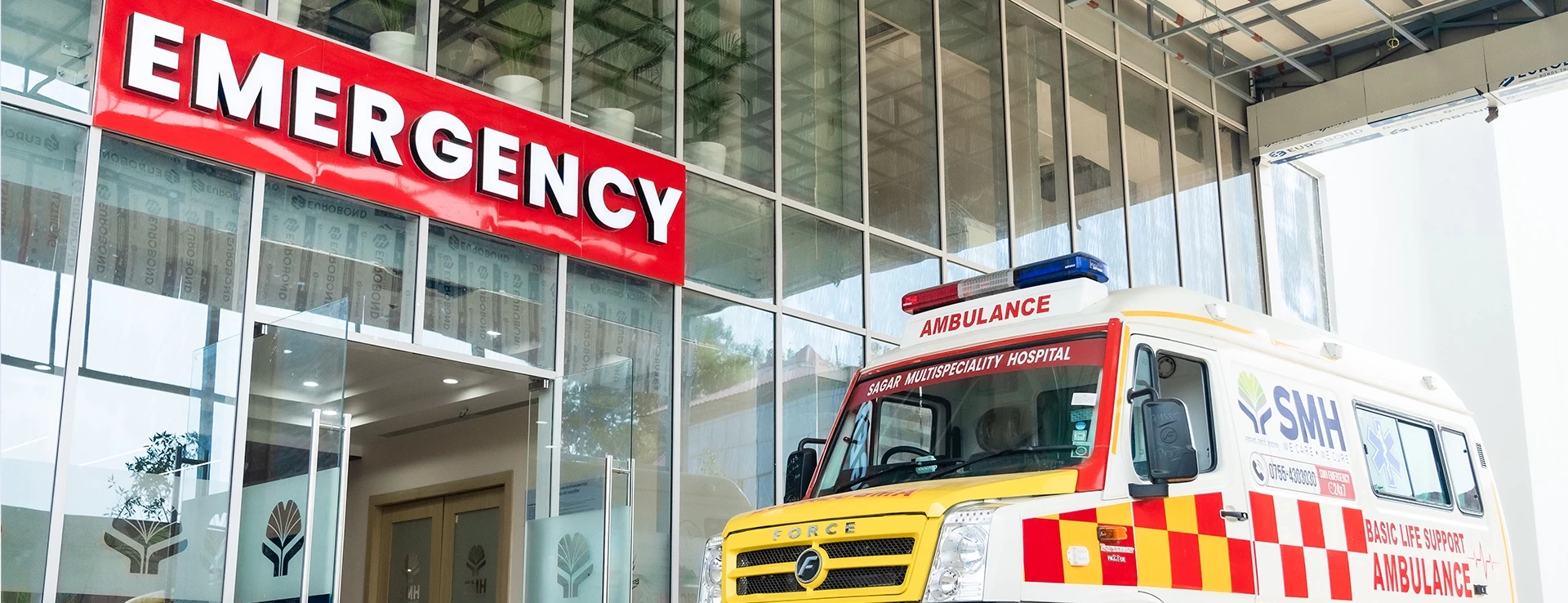
About the Department & USPs
Welcome to our hospital's Accident and Emergency (A&E) department. We provide prompt and specialized medical care to individuals who require immediate attention in these uncertain times. Our dedicated team of healthcare professionals is available 24/7, ensuring prompt assessment, treatment, and support in times of unexpected accidents and medical emergencies.
If you or a loved one requires immediate medical attention, please do not hesitate to visit our Accident and Emergency department.
Conditions We Treat
Our highly trained and responsive EMT provides you with the best medical choices to prevent or treat many conditions, including:
- Traumatic injuries (e.g., fractures, head injuries)
- Burns and scalds
- Severe bleeding
- Chest pain and suspected heart attack(s)
- Stroke symptoms
- Allergic reactions and anaphylaxis
- Asthma attacks
- Respiratory distress
- Abdominal pain
- Seizures or convulsions
- Suspected poisoning & overdose
- Infections & high fever
Caring Hands
- Emergency Medical Technician (EMT)
- Paramedic
- Emergency Physician
- Trauma Surgeon
- Trauma Nurse
- Emergency Preparedness Coordinator
- Emergency Department Coordinator

Dr. Suman Kumar Chandan
Consultant, Emergency Medicine Services
Department
Accident & Emergency
Expertise
Trauma & Critical Care Management, Polytrauma Management, Poisoning & Emergency Interventions, Intubation & Mechanical Ventilation, ICD Insertion, Point-of-Care Ultrasound in Trauma, Arterial Line Insertion, Basic Life Support (BLS), Advanced Cardiac Life Support (ACLS), Advanced Trauma Life Support (ATLS)

Dr. Manoj Nagar
Senior Consultant, Orthopaedic, Sports Injury and Arthroscopic Services
Department
Accident & Emergency
Expertise
Primary and Revision Hip, Knee and Shoulder Replacement Surgeries | Arthroscopic Surgeries of Shoulder and Knee | Complex Trauma Surgeries

DR. Pushkar Ravindra Ranade
Consultant, Neurosurgery Services
Department
Accident & Emergency
Expertise
Brain Tumor Surgery | Spine Surgery | Vascular Neurosurgery | Pediatric Neurosurgery | Minimally Invasive Surgery | Skull Base Surgery | Functional Neurosurgery | Trauma and Emergency Neurosurgery | Stereotactic Surgery | Neuro-Oncology | Peripheral Nerve Surgery | Epilepsy Surgery | Cerebrovascular Surgery | Spinal Cord Tumor Surgery | Hydrocephalus Treatment | Endoscopic Neurosurgery | Chiari Malformation Surgery | Neurocritical Care | Neurotrauma Management | Pain Management Surgery
Accident and Emergency (A&E) departments, also known as Emergency Departments (EDs), are vital healthcare facilities that provide immediate medical care to patients who require urgent attention due to injuries or acute illnesses. Technology plays a crucial role in supporting the operations and enhancing patient care in A&E departments. Here are some key technologies commonly used in these departments:
- Computerized Physician Order Entry (CPOE)
- Telemedicine and Teletriage
- Medical Imaging
- Point-of-Care Testing (POCT)
You should go to the emergency department if you are experiencing severe symptoms like severe chest pain, difficulty breathing, weakness in your body, severe bleeding, fever in children, severe injury, or loss of consciousness.
If someone faints, the first thing to do is to make the person lie down and put their legs slightly up. If the person fails to regain consciousness within a minute or shows signs of difficulty breathing, seek immediate medical attention.
You can call us at 7880161616 for emergency services.
Sudden pain in the chest, along with sweating, breathlessness, or pain in the arm or jaw, may indicate that you are having a heart attack. In this case, seek immediate medical attention.
The patients are first assessed using a triage system, and the most critical cases are treated immediately. Doctors and nurses attend to the necessary tests and emergency treatment for the patient.
Yes, the accident and emergency department runs for 24 hours with doctors, nurses, and emergency services available to attend to emergency cases at any time of the day.