
 Helpline : 7880161616
 WhatsApp


About the Department & USPs
Welcome to our Anesthesiology department, where we specialize in the art of pain management and ensuring patient safety during medical procedures. Our team of expert anesthesiologists is highly skilled in administering sedation tailored to each patient's needs. We use safe and efficient anesthesia techniques to optimize patient comfort and recovery. Our preoperative assessment ensures personalized care plans, minimizing risks during procedures.
Conditions We Treat
-
Surgical procedures of various specialties, including:
- General surgery
- Orthopedic surgery
- Cardiothoracic surgery
- Neurosurgery
- Obstetrics and Gynecological surgery
- Urological surgery
- Plastic and reconstructive surgery
- ENT surgery
- Dental surgery
- Onco Surgery
- Laparoscopic surgery
- Pediatric surgery.
-
Obstetric procedures, such as:
- Cesarean section (C-section)
- Labor analgesia
-
Pain management for chronic conditions, including:
- Chronic back pain
- Chronic pelvic pain
- Neuropathic pain
- Cancer-related pain
-
Pain management for acute conditions, such as:
- Acute postoperative pain
- Trauma-related pain
- Acute pancreatitis
-
Critical care and management of critically ill patients in:
- Intensive Care Units (ICUs)
- Post-Anesthesia Care Units (PACUs)
-
Anesthesia for diagnostic and therapeutic procedures, including:
- Endoscopy (e.g., gastroscopy, colonoscopy)
- Cardiac catheterization
- MRI (Magnetic Resonance Imaging) scans
-
Regional anesthesia techniques, such as:
- Epidural anesthesia
- Spinal anesthesia
- Nerve blocks
- Caudal Anesthesia
- Anesthesia for pediatric patients undergoing surgery or procedures
- Sedation for minor procedures and diagnostic tests
- Preoperative assessment and optimization of patients' health status before surgery
Caring Hands
- Anesthesiologist
- Anesthesia Technician
- Anesthesia Assistant
- Anesthesia Nurse

Dr. Mahesh Sudhakar Kurwe
Deputy Director (Medical) and Consultant, Anaesthesiology & Critical Care Services
Department
Anaesthesiology
Expertise
Critical Care, Ultrasound Guided Nerve Blocks, Pain Management

Dr. Rajiv Modi
Senior Consultant, Anaesthesia & Critical Care Services
Department
Anaesthesiology
Expertise
cardiac anesthesia, perioperative care, hemodynamic monitoring, transesophageal echocardiography, pain management, pharmacology, airway management, cardiovascular physiology, critical care, regional anesthesia, patient assessment

Dr. Somesh Garde
Consultant, ICU Services
Department
Anaesthesiology
Expertise
Critical Care, Ultrasound Guided Nerve Blocks, Pain Management

Dr. Manjeet Singh Rajput
Consultant, Anaesthesiology Services
Department
Anaesthesiology
Expertise
Transplant Anaesthesia, Paediatric Anaesthesia, Peripheral Nerve Blocks, Regional Anaesthesia, Critical Care Medicine, ICU Management, General Anaesthesia, Surgical Anaesthesia, Perioperative Care, Ultrasound-Guided Nerve Blocks, Pain Management, Airway Management, Emergency Anaesthesia, High-Risk Surgical Anaesthesia

Dr. Satyendra Patidar
Consultant Anaesthesiology & Critical Care Services
Department
Anaesthesiology
Expertise
Labour Analgesia | Pediatric Anesthesia | Critical Care |Regional Anesthesia | Oncoanaesthesia | Endo anesthesia
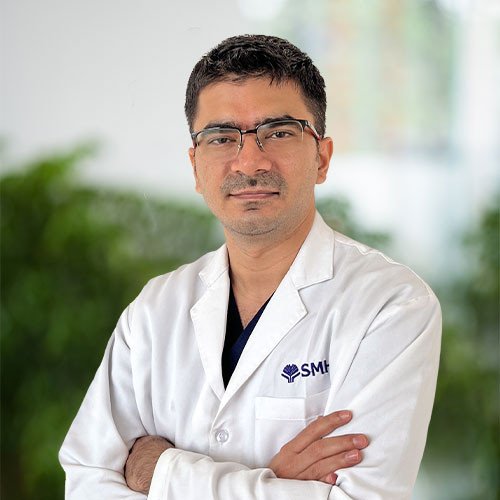
Dr. Anuj Manoj Kapoor
Senior Consultant, Cardiac Anaesthesia Services
Department
Anaesthesiology
Expertise
Adult Cardiac Anaesthesia, Paediatric Cardiac Anaesthesia, Cardiac Critical Care, Cardiac Intensive Care, Perioperative Cardiac Anaesthesia, Coronary Artery Bypass Grafting (CABG), Valve Surgery Anaesthesia, Minimally Invasive Cardiac Surgery, Heart Transplantation, Mechanical Circulatory Support, Extracorporeal Membrane Oxygenation (ECMO), Transcatheter Aortic Valve Implantation (TAVI)

Dr. Aishwarya Guru
Associate Consultant, Anaesthesiology Services
Department
Anaesthesiology
Expertise
Anaesthesiology, Critical Care & ICU Management, Trauma & Emergency Care, Cardiac Care Unit (CCU) Management, Pain Management

Dr. Anchal Anand
Associate Consultant, Anaesthesiology Services
Department
Anaesthesiology
Expertise
Perioperative Medicine, Advanced Airway Management, Regional Anaesthesia, Ultrasound-Guided Regional Anaesthesia, Critical Care Medicine, ICU Management, Monitored Anaesthesia Care, Non-Operating Room Anaesthesia, Pain Management, Pre-Anaesthetic Evaluation, General Anaesthesia, Intensive Care Services, Surgical Anaesthesia, Emergency Airway Management, Postoperative Care

Dr. Priyanka Bhojwani
Consultant Anesthesiologist
Department
Anaesthesiology
Expertise
Perioperative management, critical care, pain management, and handling high-risk and emergency cases with precision.
Technology has greatly impacted the field of anesthesiology, improving patient safety, monitoring capabilities, and anesthesia delivery. Here are some examples of technologies commonly used in anesthesiology:
- Anesthesia Delivery Systems
- Pulse Oximetry
- Non-invasive Blood Pressure Monitoring
- Ultrasound-Guided Regional Anesthesia
- Point-of-Care Testing (POCT)
- Anesthesia Information Management Systems (AIMS)
- Needle-Free Jet Injectors and Transdermal Patches
Anaesthesia is a medical technique whereby pain is avoided during a medical operation or surgery. This technique helps a person remain comfortable, and medical procedures are conducted with ease. It may make a certain body part numb or put the person to sleep, depending on the operation to be performed.
There are three different types of anaesthesia, namely, local anaesthesia, regional anaesthesia, and general anaesthesia. Local anaesthesia is when a small part of the body is made numb, regional anaesthesia is when a larger part of the body, like the lower half of the body, is made numb, while general anaesthesia is when a person is put into a deep sleep.
Anaesthesia is very safe when administered by qualified experts. Before surgery, the anaesthesiologist will study the medical history, medications, and test results of the person to be operated on, in order to ensure safe administration of the anaesthesia and reduce the risk of complications during the operation.
Patients are usually advised to avoid food and drinks for a few hours before undergoing surgery. This is to prevent vomiting and breathing difficulties when under the influence of anaesthesia. Your doctor will advise you on fasting before the surgery.
Mild drowsiness, nausea, a sore throat, or dizziness can be felt by some patients after surgery. These are usually short-lived and can be relieved within a few hours.