
 Helpline : 7880161616
 WhatsApp


About the Department & USPs
Welcome to our hospital's General and Bariatric Surgery Department, where we offer life-changing surgical solutions for various medical conditions. Our skilled team of surgeons is dedicated to delivering exceptional care, whether it's a routine procedure or a bariatric surgery aimed at transforming lives towards a healthier and happier future.
Conditions We Treat
-
General Surgery Conditions:
- Appendicitis
- Gallbladder disease (Gallstones)
- Hernias (Inguinal, Umbilical, Incisional, etc.)
- Gastroesophageal reflux disease (GERD)
- Peptic ulcers
- Diverticulitis
- Colorectal conditions (e.g., colon polyps, colorectal cancer)
- Pancreatitis
- Thyroid and parathyroid disorders (e.g., goiter, hyperparathyroidism)
- Breast conditions (e.g., breast cancer, benign breast lumps)
- Skin and soft tissue masses (e.g., lipomas, cysts)
- Hemorrhoids
- Peripheral artery disease (PAD) and varicose veins
- Abdominal trauma or injuries requiring surgical intervention
-
Bariatric Surgery Conditions:
- Obesity (Body Mass Index - BMI ≥ 40)
- Obesity with significant comorbidities (BMI ≥ 35) like type 2 diabetes, hypertension, etc.
- Dyslipidemia (abnormal lipid levels)
Caring Hands
- General Surgeon
- Bariatric Surgeon
- Laparoscopic Surgeon
- Minimally Invasive Surgeon
- Gastrointestinal Surgeon

Dr. Punit Dixit
Consultant, Minimal Invasive & General Surgery Services
Department
General and Bariatric Surgery
Expertise
Laparoscopic Surgery | Hernia Surgeries | Piles Fissure | Fistula | Sinus | Appendicitis | Other General Surgical Problem
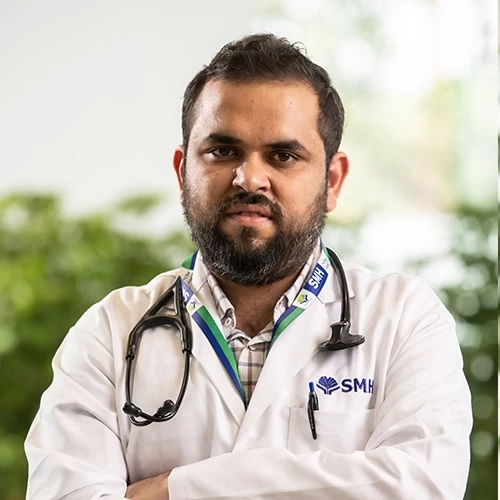
Dr. Siddharth Gurwani
Associate Consultant, General & Laparoscopy Surgery Services
Department
General and Bariatric Surgery
Expertise
Chest and Abdominal Trauma | Minimal Access Surgery | Anorectal Diseases | Breast Lump | Non-healing Wound
Technology has had a transformative impact on general and bariatric surgery, improving surgical techniques, patient outcomes, and safety. Here are some examples of technologies commonly used in these surgical specialties:
- Laparoscopy
- Surgical Navigation Systems
- Surgical Staplers
- Electrocautery
- Harmonic Scalpels
- Advanced Vessel Sealing Systems
The common conditions treated by general surgeons include appendicitis, gallstones, piles or haemorrhoids, hernias, breast lumps, thyroid problems, and colorectal disorders.
Laparoscopic surgery is a minimally invasive surgical procedure done with the aid of a camera. The benefits of laparoscopic surgery include reduced pain, small scars, shorter hospital stays, and faster recovery times.
In some cases, surgery for gallstones may be necessary if the patient experiences certain signs and symptoms, such as abdominal cramps, nausea, vomiting, and infection, resulting from gallstones.
In most cases, appendicitis results in extreme abdominal pain on the lower right side, fever, nausea, vomiting, and decreased appetite. This is a medical emergency, and surgery is necessary to remove the appendix.
In most cases, a hernia occurs when an organ protrudes from a weakened part of the abdominal wall, causing a lump or swelling in the abdomen, and surgery is necessary for its treatment.
It is a weight loss surgery that is recommended for those who are suffering from severe obesity and are not able to lose weight with diet and exercise alone. It is recommended for those whose BMI is 40 or higher, or for those whose BMI is 35 or higher with other medical problems like diabetes, high blood pressure, and sleep apnea.