
 Helpline : 7880161616
 WhatsApp

About the Department & USPs
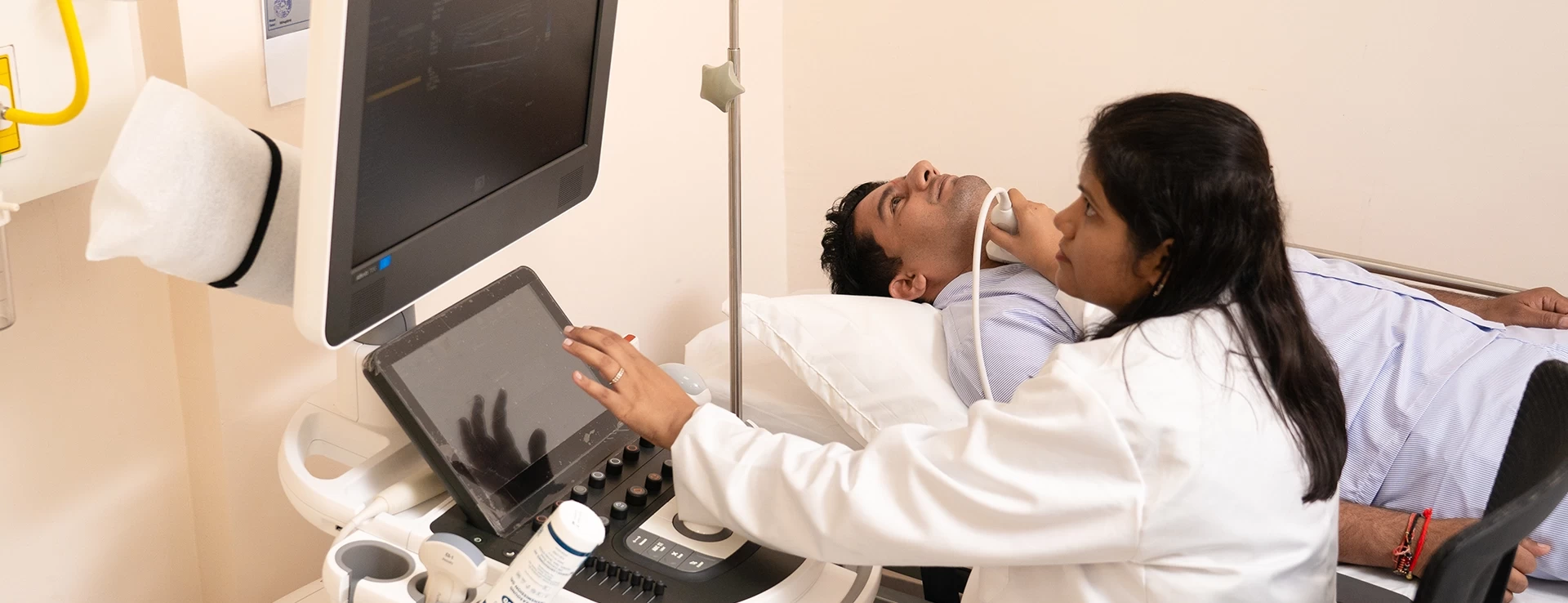
Welcome to our Radiology Department, where compassionate care meets advanced imaging technology. Our team of skilled radiologists is dedicated to providing accurate diagnoses and personalized treatment plans. We offer a wide range of services to help detect and treat various conditions.
Conditions We Treat
Our highly trained imaging specialists, precise and breakthrough technology, and recovery care also provide you with the best medical choices to prevent or treat many conditions, including:
- Fractures and bone injuries
- Tumors and cancers
- Cardiovascular diseases
- Lung diseases
- Digestive system disorders
- Kidney and urinary tract problems
- Brain and nervous system conditions
- Spinal cord injuries
- Joint and musculoskeletal disorders
- Obstetric and gynecological issues
Caring Hands
- Radiologist
- Radiologic Technologist
- Diagnostic Radiographer
- Radiology Nurse
- Interventional Radiologist
- Neuroradiologist
- Pediatric Radiologist
- Musculoskeletal Radiologist
- Cardiothoracic Radiologist
- Abdominal Radiologist
- Breast Imaging Specialist
- Vascular and Interventional Radiologists
- Magnetic Resonance Imaging (MRI) Technologist
- Computed Tomography (CT) Technologist
- Mammography Technologist
- Ultrasound Technologist

Dr. Abhishree Gupta
Consultant, Radiology Services
Department
Radiology
Expertise
Mammography & Sono mammography | Neuroimaging | Body imaging | MSK and Vascular imaging | Ultrasound and CT Guided Interventions | Ultrasound and CT Guided Biopsy

Dr. Ashu Dixit
Consultant, Radiology Services
Department
Radiology
Expertise
Diagnostic Radiology, Ultrasound Imaging, Fetal Imaging, Obstetric and Gynaecological Scans, Abdominal and Pelvic Ultrasound, Musculoskeletal Ultrasound, Colour Doppler Imaging, Fetal Anomaly Scans, Trauma and Emergency Imaging, Fetal Radiology and Genetics, Radiodiagnosis and Reporting, Advanced Ultrasound Techniques, Trauma Care and Radiology in Emergency Settings, Bullet and Blast Injury Imaging, Patient-Focused Diagnostic Interpretation

Dr. Darakshan Khan
Associate Consultant, Radiology Services
Department
Radiology
Expertise
Breast Imaging, Abdominal Imaging, Liver Elastography, Ultrasound Imaging, Color Doppler Studies, CT Scan Interpretation, MRI Reporting, Diagnostic Imaging, Women’s Health Imaging, Fetal and Pelvic Scans, Radiodiagnosis and Reporting, Advanced Ultrasound Techniques, Patient-Centered Diagnostic Care
Radiology is a rapidly evolving field, and several advancements in technology have revolutionized medical imaging and diagnostic capabilities. Here are some of the latest technologies in radiology:
- 3D Mammography
- Interventional Radiology (IR) Advances
- 128 slice dual energy CT scan ( AI powered)
- Contrast-Enhanced Ultrasound (CEUS)
The radiation used in a standard chest X-ray is low and not harmful. Digital X-ray machines use the lowest level of radiation necessary to produce a clear picture.
For most X-rays, no special preparation is necessary. Patients may be asked to remove any metal items, such as jewellery and belts. Patients should let the doctor or technician know if they are pregnant.
A CT scan usually takes around 5–10 minutes. In some cases, a contrast dye may be given to highlight organs or blood vessels. Some patients may feel a brief warm sensation after contrast injection. Doctors may check kidney function before giving contrast.
MRI uses strong magnetic fields and radio waves to produce detailed images of organs, like the brain, spine, joints, and soft tissues. It is particularly useful for diagnosing neurological conditions, spinal problems, ligament injuries, and tumours.
Patients often find MRI machines to be quite enclosed. Many machines are now wider, and patients can be provided with ear protection and relaxation assistance during their scan.
MRI is not recommended during the first trimester of pregnancy unless necessary. New implants and pacemakers are now compatible with MRI machines; however, patients must inform their medical team of any implants before their procedure.
DEXA scanning is a scanning procedure to check bone density and diagnose osteoporosis. DEXA scanning is usually recommended for postmenopausal women, elderly patients, and those with risk factors for poor bone density. The procedure is painless and quick.
Ultrasound is generally the first choice for imaging tests in pregnant women since it does not involve any radiation. The other imaging tests are done only when necessary.