 Helpline : 7880161616
 WhatsApp



Robotic Knee Replacement Surgery in Bhopal
Robotic-Assisted Surgery at SMH
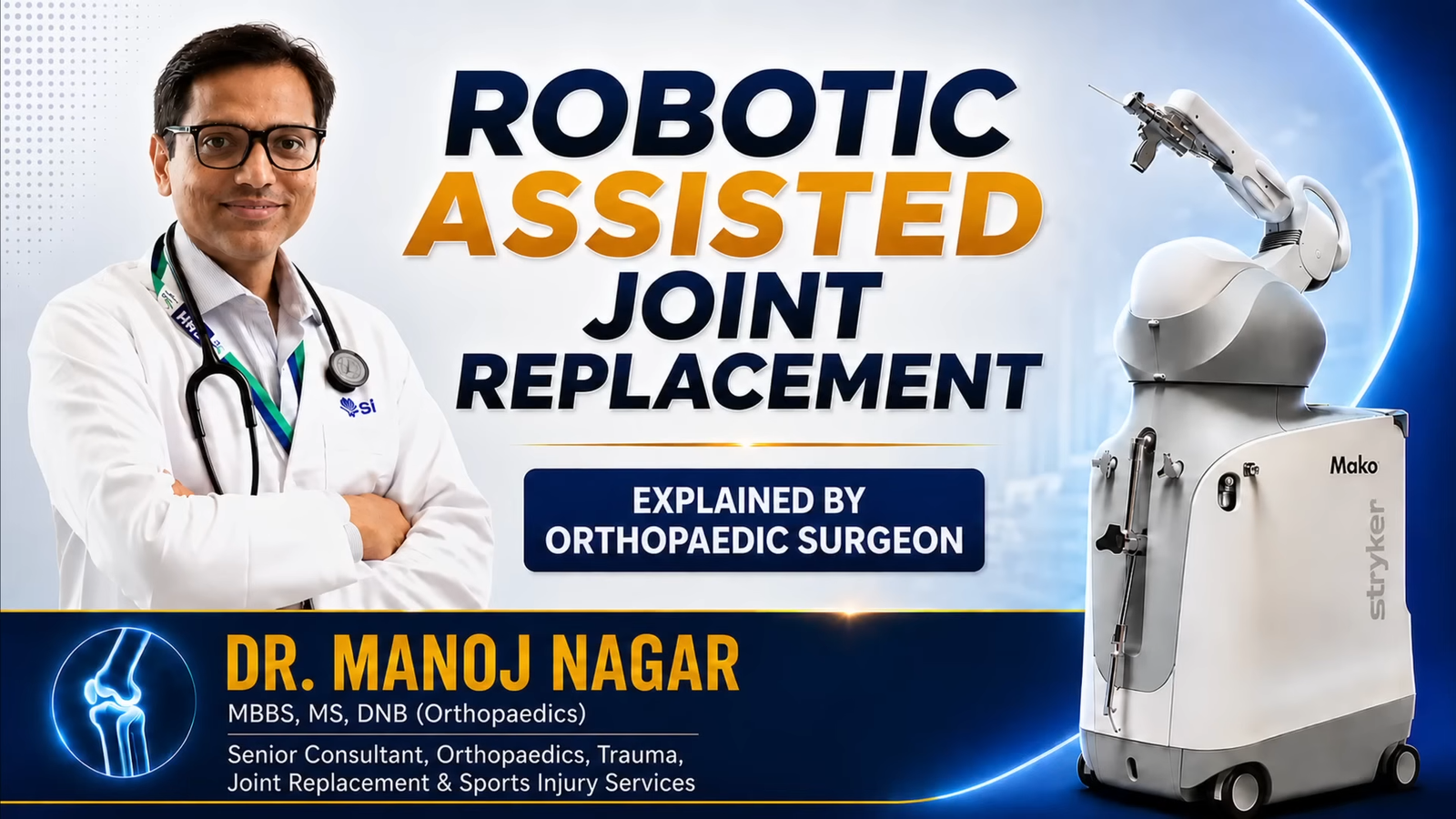
At Sagar Multispeciality Hospital, we bring the future of orthopaedic care through advanced robotic-assisted surgery powered by Mako® Robotic Technology.
Designed to enhance surgical precision and personalise treatment for every patient, robotic knee replacement surgery helps improve implant positioning, joint alignment, and overall outcomes.
Whether you are struggling with chronic knee pain, arthritis, or reduced mobility, robotic surgery offers a highly accurate and patient-specific approach to joint replacement.
By combining advanced imaging, detailed surgical planning, and real-time guidance, robotic-assisted surgery supports a smoother recovery and improved long-term function.
Consult Our Robotic Surgery Experts
Our Robotic Surgery Specialist

Dr. Manoj Nagar
Senior Consultant, Orthopaedic & Trauma Services
Department
Orthopaedics, Joint Replacement & Sports Injury
Expertise
Primary and Revision Hip, Knee and Shoulder Replacement Surgeries | Arthroscopic Surgeries of Shoulder and Knee | Complex Trauma Surgeries
How Robotic-Assisted Surgery Works
Robotic-assisted surgery follows a personalised approach
This advanced process helps deliver greater precision while supporting improved patient outcomes.

Detailed imaging of the affected joint

Creation of a patient-specific surgical plan

Real-time guidance during surgery

Accurate implant placement and alignment

Continuous surgeon control throughout the procedure
Benefits of Robotic Knee Replacement Surgery

-
Advanced Mako® Robotic Technology
1
-
Experienced orthopaedic surgeons
2
-
Personalised treatment planning
3
-
Comprehensive rehabilitation support
4
-
Modern surgical infrastructure
5
-
Patient-centred care at every stage of recovery
6
Frequently Asked Questions
Answer
Yes. Robotic-assisted surgery is designed to enhance surgical precision and control while the surgeon remains responsible for every step of the procedure.
Answer
No. The surgeon performs the surgery. The robotic system assists with planning and precision-guided execution.
Answer
The benefits of robotic surgery include:
- Enhanced precision and personalized treatment planning
- Improved implant positioning
- Reduced pain and potentially faster recovery
Answer
Most patients experience post-operative discomfort after any surgery. However, robotic-assisted techniques may help reduce tissue trauma and support a smoother recovery.
Answer
Recovery timelines vary depending on the patient's condition, overall health, and rehabilitation programme. Your surgeon will provide a personalised recovery plan.
Answer
Patients meeting any of the following parameters may be suitable candidates:
- Severe arthritis or chronic knee pain
- Significantly reduced mobility
- Failed conservative treatments (medication, physical therapy)
Answer
Yes. Sagar Multispeciality Hospital offers advanced robotic knee replacement surgery using Mako® Robotic Technology to provide precise, patient-specific orthopaedic care.
Who Is a Candidate for Robotic Knee Replacement?
You may be a suitable candidate for robotic knee replacement surgery if you:
1
Suffer from severe knee pain
2
Have osteoarthritis or joint degeneration
3
Experience stiffness affecting daily activities
4
Find it difficult to walk, climb stairs, or stand for long periods
5
Have not achieved relief through medication, physiotherapy, or lifestyle modifications
A consultation with our orthopaedic specialists can help determine whether robotic-assisted surgery is the right treatment option for you.
The Mako Difference
At Sagar Multispeciality Hospital, robotic knee surgery is powered by Mako® Robotic Technology, one of the most advanced robotic systems used in joint replacement procedures worldwide.
Mako technology enables surgeons to create a customised surgical plan before the procedure begins and provides real-time feedback throughout surgery. This combination of planning and precision helps optimise implant placement while preserving healthy bone and tissue wherever possible.
The result is a highly personalised approach designed around the patient's unique anatomy and mobility goals.